Academic Writing Challenges Among Tourism and Hospitality Students
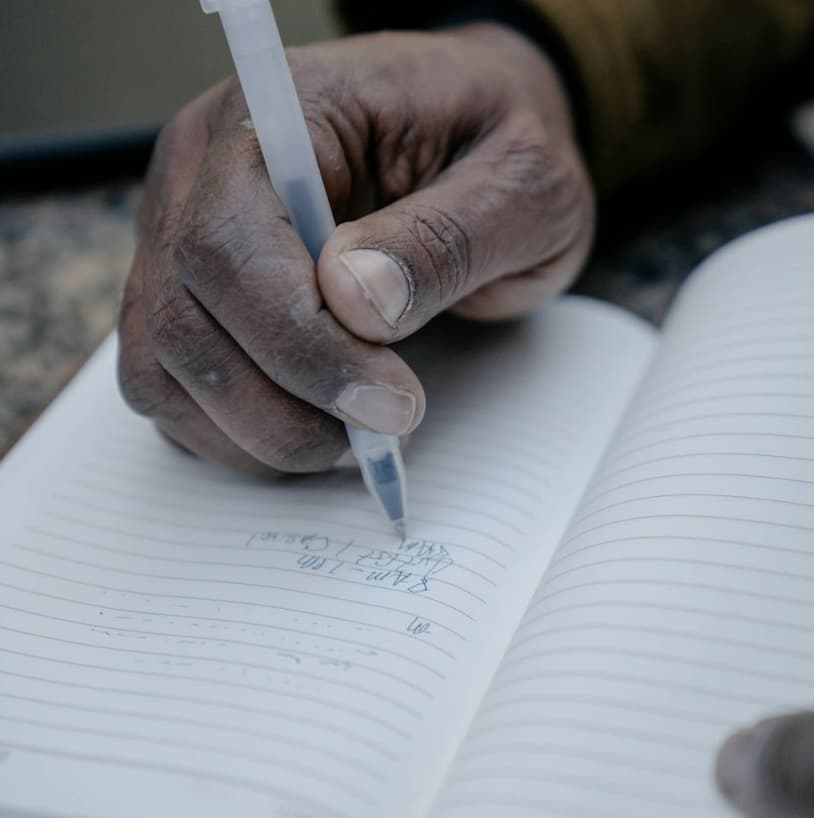
Academic writing is one of the most demanding skills that students in tourism and hospitality programmes are expected to master, yet it is rarely the reason they chose their field in the first place. Many enrol because they are drawn to service, travel, culture, and management, only to discover that completing a degree requires extensive essays, research reports, internship reports, and a final thesis or mémoire. This gap between practical career aspirations and academic expectations creates a distinctive set of writing difficulties. Understanding these challenges matters because writing quality directly affects grades, graduation rates, and the credibility of graduates entering a highly competitive global industry. For students who struggle, professional https://memoredaction.com/ writing assistance can provide valuable support. This article examines the most common academic writing challenges faced by tourism and hospitality students, the underlying causes, and the support strategies that help them succeed.
The Nature of Writing in Tourism and Hospitality Studies
Tourism and hospitality is an applied, interdisciplinary field. A single assignment may ask a student to combine concepts from marketing, economics, geography, sociology, and management, and then connect them to real-world cases such as a hotel chain, a destination, or a tour operator. This breadth is intellectually rich but also confusing for writers, because each discipline carries its own conventions, vocabulary, and citation expectations. A student who can fluently describe guest service procedures may still struggle to frame a research problem, build a coherent literature review, or interpret statistical data in academically acceptable language.
The challenge is intensified by the international character of the field. A large share of tourism and hospitality students study in a second or third language, frequently English, while pursuing careers that are inherently multilingual. As a result, language proficiency and academic writing competence become entangled: weaknesses in grammar and vocabulary are often mistaken for weaknesses in thinking, and vice versa.
Common Academic Writing Challenges
Research and classroom experience consistently point to a recurring cluster of difficulties. The most frequently reported challenges include:
- Structuring arguments logically, especially moving beyond description toward critical analysis and evaluation.
- Writing in a second language, where limited vocabulary and grammatical accuracy slow the writer and obscure good ideas.
- Mastering citation and referencing styles such as APA, Harvard, or MLA, which many students find arbitrary and intimidating.
- Developing a clear research problem and problematique, particularly in the final thesis where independence is expected.
- Avoiding plagiarism, often unintentionally, because students are unsure how to paraphrase or integrate sources.
- Managing time and the writing process, since long documents require planning that practical, hands-on learners may not have practised.
Each of these difficulties feeds the others. A student who cannot structure an argument tends to copy source material more closely, which raises plagiarism risk; a student writing in a second language spends so much energy on sentences that little remains for higher-order analysis. The result is a cycle of frustration that can undermine confidence and motivation.
Causes Behind the Challenges
To address these problems effectively, it helps to separate the symptoms from their root causes. The table below summarises the relationship between the most common challenges, their typical underlying causes, and practical responses that institutions and students can adopt.
| Writing Challenge | Underlying Cause | Practical Solution |
| Weak argument structure | Limited exposure to critical-thinking and analytical writing | Teach essay frameworks and provide annotated model answers |
| Second-language difficulty | Studying in a non-native language with thin academic vocabulary | Offer academic-English support and discipline-specific glossaries |
| Citation and referencing errors | Unfamiliarity with style rules and reference managers | Run targeted workshops and introduce tools such as Zotero |
| Unclear research problem | Little practice in independent problem formulation | Use staged supervision with early problem-statement feedback |
| Plagiarism (often unintentional) | Poor paraphrasing skills and source-integration habits | Combine integrity teaching with detection tools like Turnitin |
| Poor time and process management | Practical learning style with little long-document experience | Break work into milestones with deadlines and checkpoints |
Beyond these individual factors, institutional conditions also play a role. Large class sizes limit personalised feedback, supervisors may be stretched across many students, and writing instruction is often treated as an add-on rather than an integrated part of the curriculum. When writing support is weak, students increasingly turn to external assistance, ranging from peer help and tutoring to professional editing and writing services, in order to meet academic demands.
Strategies for Improving Academic Writing
Improvement is realistic when students and institutions act systematically rather than waiting until the thesis deadline. The following step-by-step approach helps students strengthen their writing over the course of a programme:
- Diagnose the gap early. Identify whether the main weakness is language, structure, research design, or referencing, since each requires a different remedy.
- Build vocabulary and reading habits. Read academic articles in the field regularly to absorb tone, structure, and discipline-specific terminology.
- Learn one citation style thoroughly. Mastering a single style, such as APA or Harvard, with a reference manager removes a recurring source of stress.
- Practise paraphrasing deliberately. Rewrite source ideas in one’s own words and compare them with the original to develop integrity-conscious habits.
- Outline before writing. Plan the argument and section logic first so that drafting becomes filling in a structure rather than improvising.
- Seek and apply feedback. Use supervisors, writing centres, and peers, and treat revision as a normal part of the process rather than a sign of failure.
Institutions can reinforce these habits by embedding writing instruction directly into tourism and hospitality modules, training supervisors in feedback techniques, and making writing-support services visible and accessible. When academic writing is framed as a professional competence rather than a hurdle, students engage with it more willingly.
Conclusion
Academic writing challenges among tourism and hospitality students are not a sign of weak ability but a predictable consequence of an applied, interdisciplinary, and internationalised field. The recurring difficulties of argument structure, second-language writing, referencing, problem formulation, plagiarism, and time management are interconnected, and they share identifiable causes ranging from limited analytical training to inadequate institutional support. The encouraging conclusion is that these challenges respond well to early diagnosis, structured strategies, and accessible support. By treating writing as a core professional skill that complements service and management expertise, tourism and hospitality programmes can help students produce work that is academically credible and personally empowering, preparing them for both their final thesis and the communication demands of a global industry.